Espresso grinders for beginners: the part that decides the shot
A machine pushes hot water through coffee at nine bar. Whether that makes espresso or brown water is decided by how evenly the coffee is ground, and that is the grinder's job. Buy it first, spend as much on it as on the machine, and never a blade. Ten that can do it.
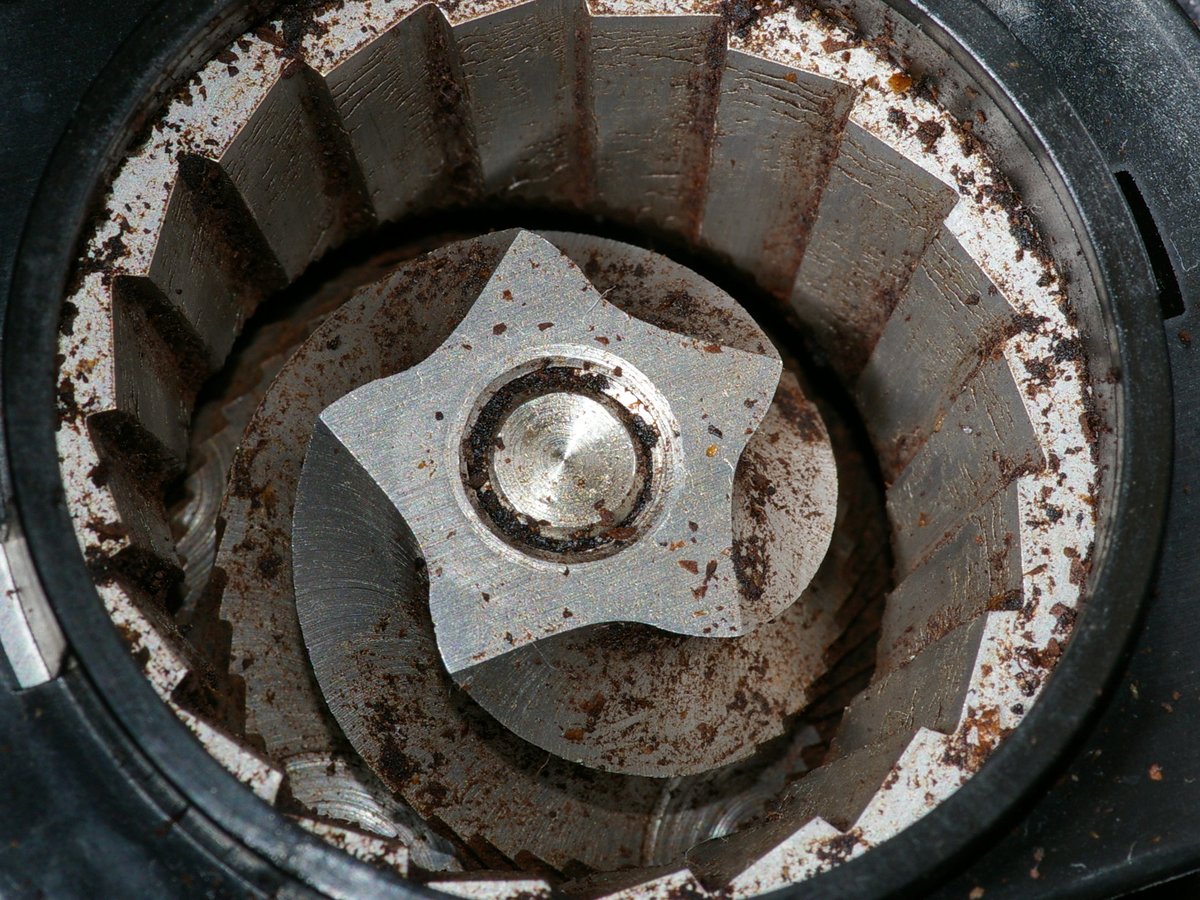
Two burrs crush beans to a set gap, so every particle is close to the same size. A blade chops at random. Breville\'s own words: burrs give "a more consistent grind size, allowing for a more balanced extraction".
Conical or flat, 38 to 64 mm
Burr type and size
Conical burrs are compact and forgiving; flat burrs grind faster and more uniformly. Bigger burrs grind faster and run cooler. Hand grinders with 48 mm conicals beat small electric ones.
Stepped or stepless
Adjustment
Espresso lives in a narrow band of fineness. Stepless dials land anywhere in it; stepped dials with 40 or 60 positions sometimes have the right shot between two clicks.
Hopper or single-dose
Dosing
A hopper holds a bag of beans and grinds by time; some grounds stay behind. Single-dose means weighing each dose in, with bellows to clear the chute: more work, fresher, exact.
Quick picks
The short answer for common situations. Each links to the full card below.
A hand grinder the maker says is fine enough for espresso, with an espresso dial.
Compare the ten
Burr size, adjustment and dosing from each maker's page; Eureka's Notte and the DF54 have no maker page and show the listing's figures. The last column is what the maker itself says about espresso, not our guess.
Product links on this page go to Amazon. If you buy through them, Your First Espresso earns a commission. How we pick and earn
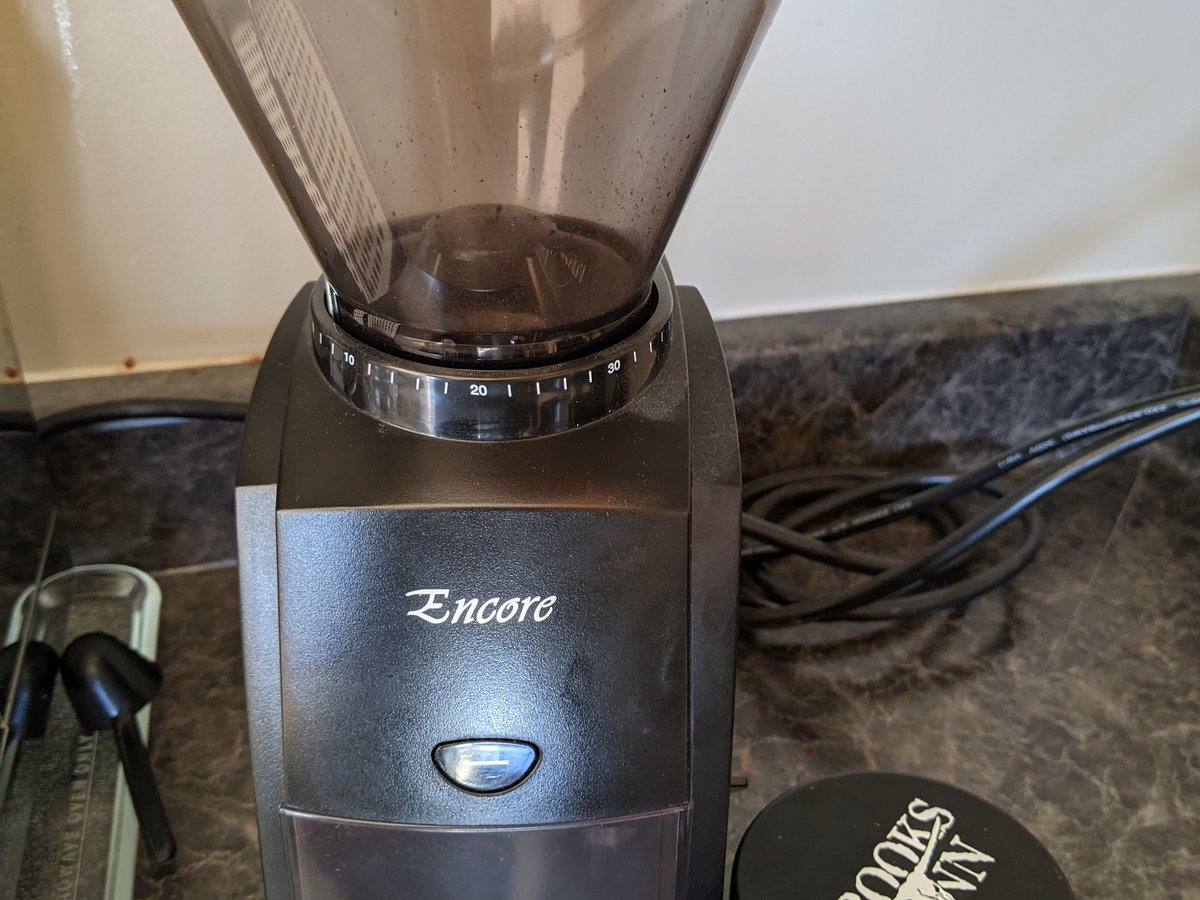
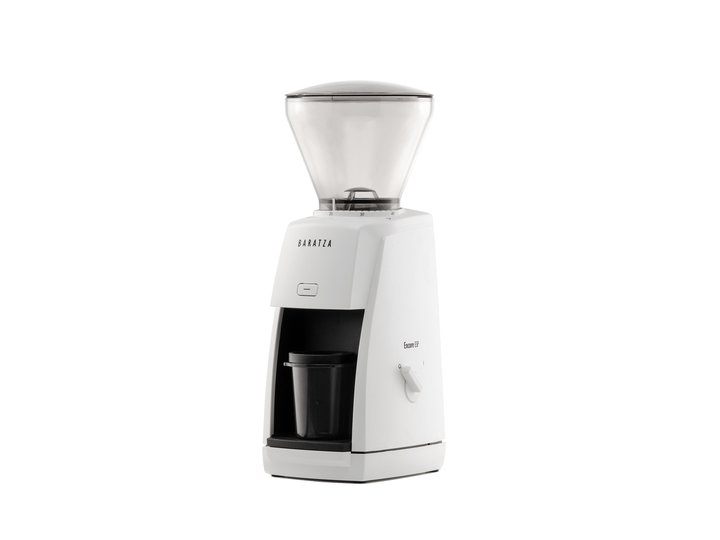
The entry espresso grinder: Baratza's Encore with a finer first half of its dial, settings 1–20 for espresso and 21–40 for filter, a dosing cup in the box, and the maker's own words that it grinds "creamy, syrupy shots".
Burrs
40 mm conical steel (M2)
Adjustment
40 steps; 1–20 espresso range
Hopper
300 g; dosing cup included
Speed
550 rpm; 1.3–2.2 g/s
Power
70 W, 100–120 V; UL/CSA listed
Size
13 × 15 × 34 cm
Warranty
1 year
Suits: The first grinder for a Bambino, Dedica or Gaggia; the one that makes a non-pressurized basket possible.
Weigh: Slow (1.3–2.2 g/s), plastic body, static on the cup. Stepped, so a shot that needs a half-step is a dose change instead. Baratza doesn't publish the weight.
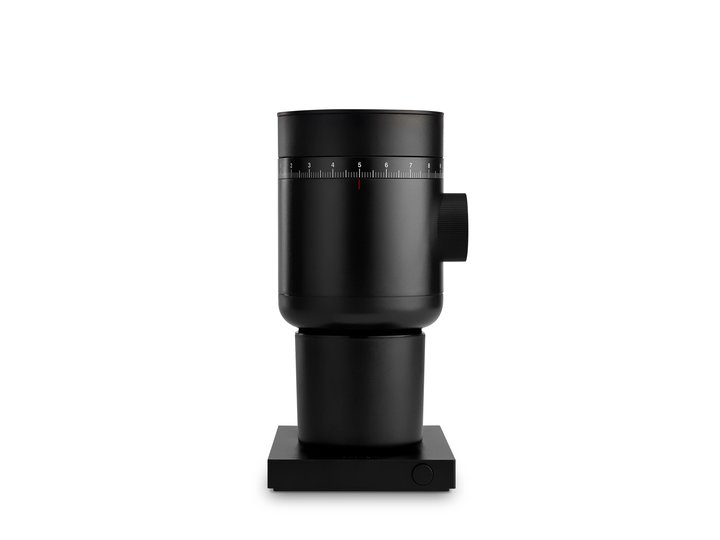
A single-dose grinder with a stepless dial and 48 mm conical burrs, designed for espresso and pour-over both, with a dosing cup that fits 54 and 58 mm portafilters and a two-year warranty.
Burrs
48 mm stainless conical
Adjustment
Stepless dial
Dose
Single-dose bin, 100 g
Power
300 W
Size
206 × 130 × 267 mm; 2.3 kg
Dosing cup
Fits 54 and 58 mm portafilters
Warranty
2 years
Suits: One grinder for espresso in the morning and filter in the afternoon; the Breville and Gaggia owner who weighs each dose.
Weigh: Consumer-tier conical burrs; a step below the flat-burr grinders for espresso clarity. Fellow's Ode is not espresso-capable; make sure the cart says Opus.
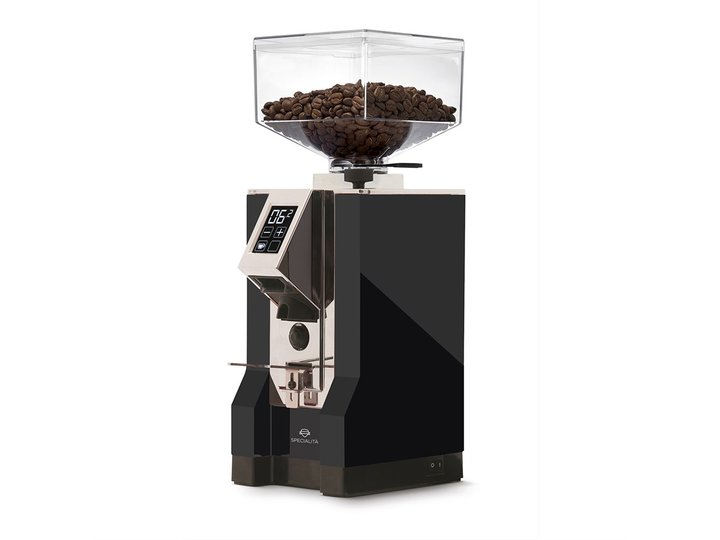
The Italian espresso grinder the hobby settled on: 55 mm flat burrs, a stepless micrometric dial, a touch display with two timed doses, a quiet motor, and a build that outlasts several machines.
Burrs
55 mm flat, hardened steel
Adjustment
Stepless micrometric
Dosing
Touch display, 2 timed doses + continuous
Speed
1,350 rpm; 1.8–2.5 g/s
Power
310 W
Size
350 × 120 × 140 mm; 5.6 kg; 300 g hopper
Suits: The grinder you buy once. Anyone pulling two or more shots a day.
Weigh: Hopper-fed, so some grounds stay in the chute between doses; the adjustment ring is at the bottom of the burr set. Amazon's 550 W and 14.6 lb are wrong; Eureka says 310 W and 5.6 kg.
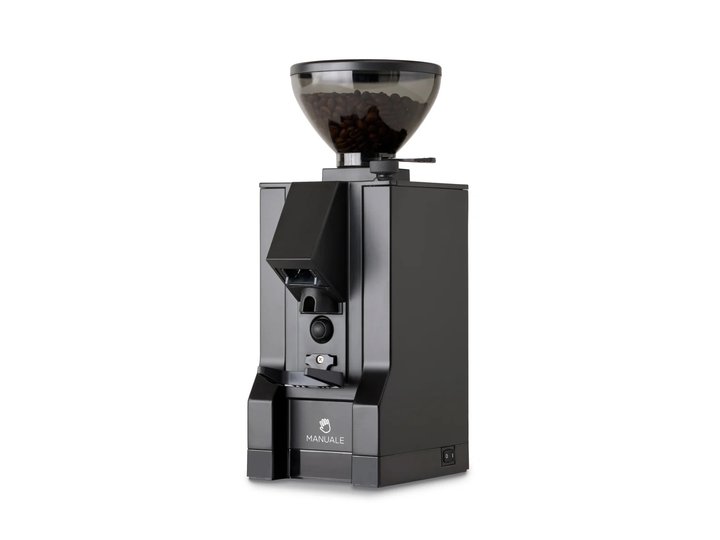
Eureka's US-market entry: 50 mm flat burrs and a stepless dial in the Mignon body, dosed by pressing the portafilter against a switch, with a small 150 g hopper.
Burrs
50 mm flat (listing)
Adjustment
Stepless
Dosing
Portafilter switch, manual
Hopper
150 g (listing)
Weight
15.2 lb (listing)
Suits: The Specialità build at a lower step, for one or two shots a day.
Weigh: A US-only model that isn't in Eureka's catalogue, so the specs are the listing's. No timer; you dose by eye or by scale.
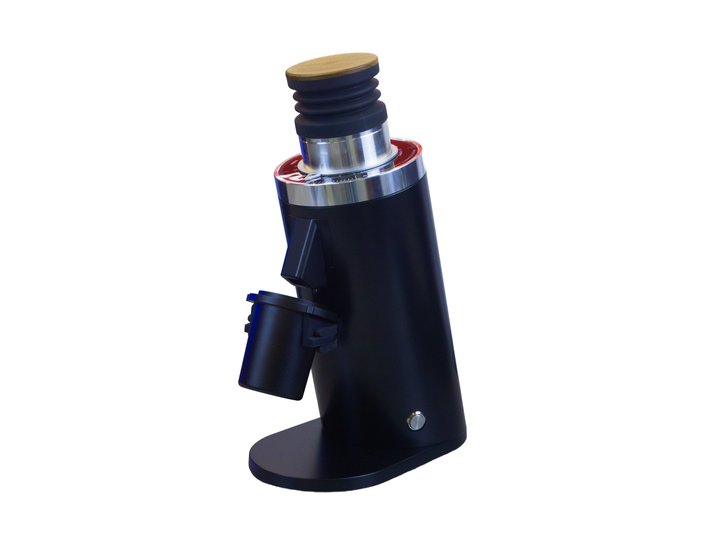
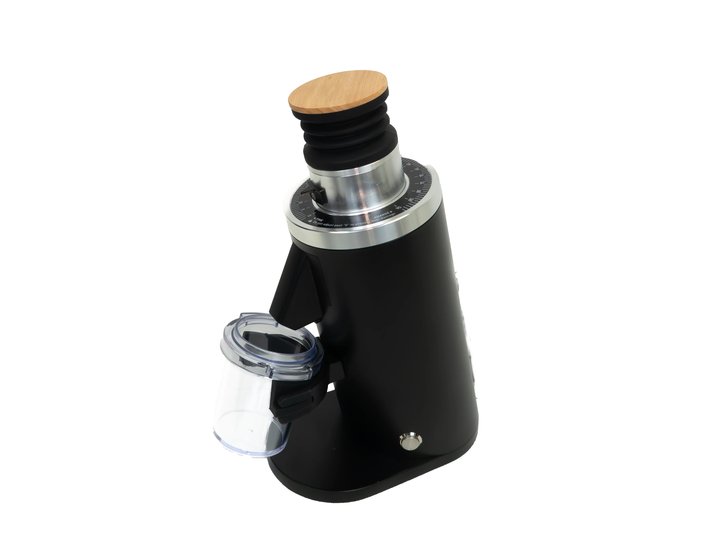
Sixty-four millimetre flat burrs, stepless, single-dose with bellows, at a price that used to buy 40 mm conicals: the grinder that moved the home-espresso goalposts, with upgrade burrs available later.
Burrs
64 mm stainless flat (SSP/DLC options)
Adjustment
Stepless
Dose
Single-dose, bellows, 50 g
Power
250 W, 100–120 V
Size
22.5 × 13 × 30 cm; 7.2 kg
Warranty
1 year
Suits: The espresso-first buyer who wants flat-burr clarity and will weigh every dose.
Weigh: Sold under several importer names on Amazon (DF64, Turin, MiiCoffee), so check the listing says Gen 2. Unit-to-unit alignment varies; the one-year warranty is standard.
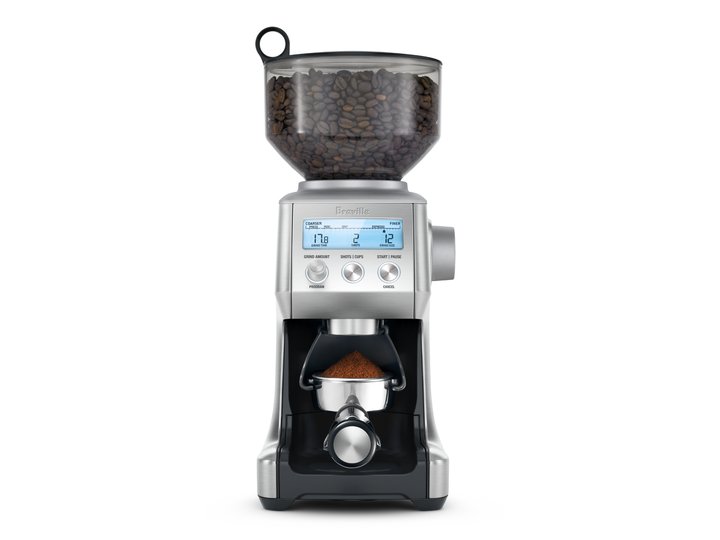
Breville's standalone grinder: stainless conical burrs, 60 settings, timed dosing in 0.2 s steps, an 18 oz hopper, and cradles for 50–54 mm and 58 mm portafilters.
Burrs
Stainless conical
Adjustment
60 steps
Dosing
Timed, 0.2 s steps; 18 oz hopper
Cradles
50–54 mm and 58 mm
Power
165 W
Size
8.5 × 6.3 × 15.3 in; 6.39 lb
Warranty
1 year
Suits: The Breville owner who wants a matching grinder with a hopper and a timer, and grinds for drip too.
Weigh: Sixty steps is coarse for dialing in espresso; many shots land between two settings. Hopper retention. The stainless version is third-party only on Amazon; this is the Black Truffle.
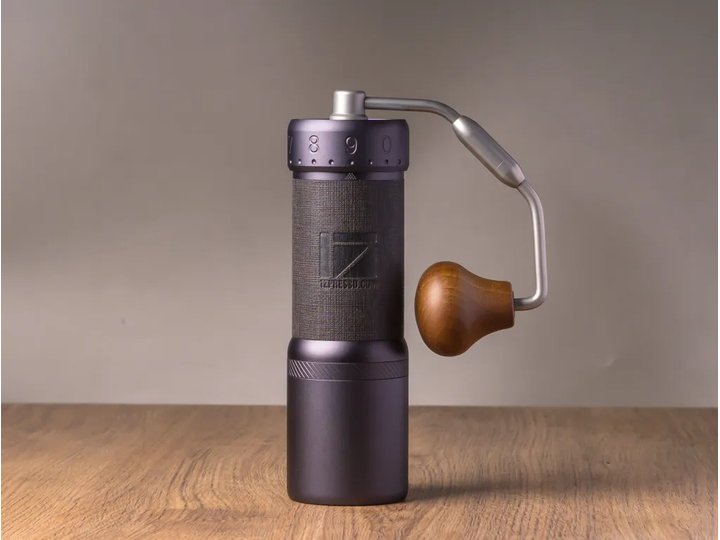
The hand grinder built for espresso: 48 mm burrs cut for it, an external dial that moves 8 microns per click, a magnetic catch cup, and a 35–40 g chamber.
Burrs
48 mm, espresso-cut
Adjustment
External, 8 µm per click
Capacity
35–40 g
Weight
670 g
Catch cup
Magnetic
Suits: One or two shots a day, a small kitchen, travel with the Picopresso; grind quality above most electric grinders at the price.
Weigh: Thirty seconds of cranking per shot, every shot. 1Zpresso doesn't publish the dimensions or warranty on the page; Amazon's "40 g" item weight is the capacity, not the grinder (670 g).
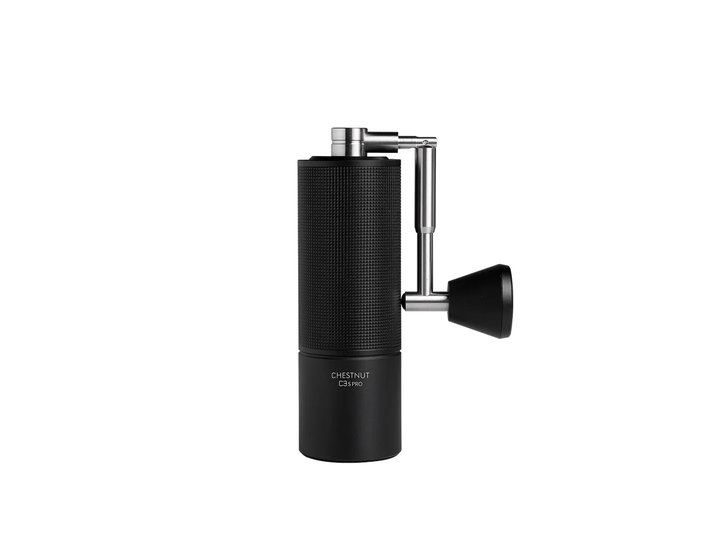
The lowest-cost grinder here that the maker says is fine enough for espresso: 38 mm stainless burrs, a dial of 30 clicks per turn at 0.0233 mm each, a folding handle and an aluminium body.
Burrs
38 mm S2C660 stainless conical
Adjustment
0.0233 mm per click, 30 per turn
Capacity
20 g (maker)
Body
Aluminium alloy
Suits: Testing whether you want espresso at all, or a travel grinder for the Nanopresso.
Weigh: Thirty-eight millimetre burrs are slow at espresso fineness: a minute of cranking. Capacity is 20 g (Timemore); Amazon says 25.
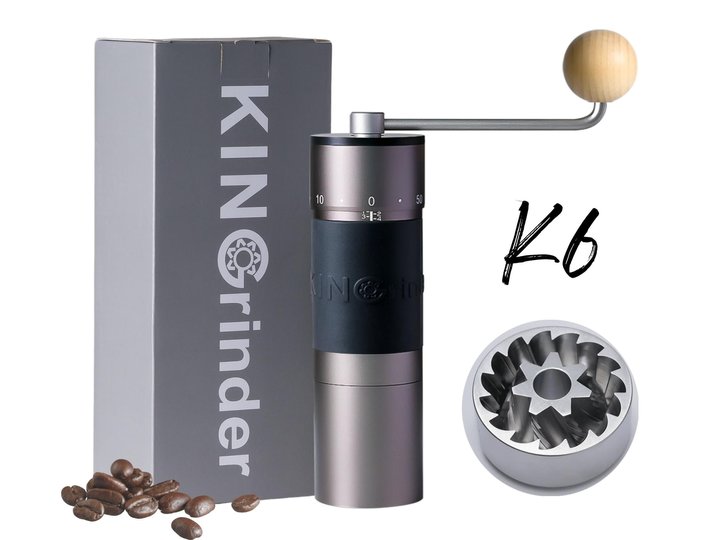
A hand grinder with an external dial of 16 microns per click, 60 clicks per turn, and a stainless burr in an aluminium body, for both espresso and filter.
Burrs
Stainless heptagonal; size not published
Adjustment
External, 16 µm per click, 60 per turn
Capacity
25–35 g (maker pages differ)
Weight
600+ g
Suits: The hand grinder for someone who also brews pour-over and switches often.
Weigh: Kingrinder's own comparison prefers its K4 for espresso and calls the K6 "versatile". The maker's pages disagree on capacity (25–30 vs 30–35 g); burr size isn't published.
Fellow puts it in one line in its beginner guide: a quality grinder is "arguably the most important part of your espresso setup", because espresso needs a fine, highly consistent grind that nothing else produces. A Bambino with an Encore ESP pulls a better shot than a machine costing three times as much fed from a blade grinder, and the machines with a grinder built in (the Barista Express, Pro and Impress) are limited by the grinder inside them. If the budget is tight, it goes here.
One honest caveat: the entry grinders are slow. Thirty seconds of noise for the Encore, thirty seconds of cranking for a hand grinder. The Eureka and the DF64 are the step where that stops.